Stop Guessing: Exactly How Many Tablespoons in 1/3 Cup?
Have you ever found yourself mid-recipe, staring at a measuring cup, and questioning the exact amount of "1/3 cup" in tablespoons? You're not alone. In the world of cooking and especially baking, precision is paramount. A seemingly small miscalculation can significantly alter the outcome of your dish, turning a flaky pie crust into a dense disaster or a light cake into a brick. This guide is designed to eliminate the guesswork, providing a clear, comprehensive answer to the age-old question: exactly how many
tablespoons in 1/3 cup?
Understanding this fundamental conversion is a game-changer for any home chef or aspiring baker. While the quick answer might seem straightforward, the nuances of different measurement systems worldwide add layers of complexity that, once mastered, will elevate your culinary confidence.
The Straight Answer: How Many Tablespoons in 1/3 Cup? (US Customary)
Let's cut to the chase for those using the US customary measurement system, which is prevalent in most American recipes.
In the United States, there are **5 1/3 tablespoons in 1/3 cup**.
To break this down further for practical use, since one tablespoon is equivalent to three teaspoons, 1/3 of a tablespoon is exactly one teaspoon. Therefore, 1/3 cup is equal to **5 tablespoons and 1 teaspoon**.
This conversion is rooted in the standard fact that **1 US customary cup equals 16 tablespoons**. So, to find out how many tablespoons are in 1/3 of a cup, you simply multiply:
(1/3 cup) × (16 tablespoons/cup) = 16/3 tablespoons = 5 1/3 tablespoons.
Converting that fraction into a more manageable measurement for your kitchen means recognizing that 1/3 tablespoon equals 1 teaspoon. This simplifies your measuring process dramatically, ensuring you hit the mark every time without needing to eyeball a third of a spoon.
Why Precision Matters: The Science of Baking Conversions
While a little improvisation can be the spice of life in general cooking, baking operates more like a science experiment. The ratios of ingredients, particularly the balance between wet and dry, fats and liquids, are critical to the chemical reactions that give baked goods their structure, texture, and flavor. Guessing when a recipe calls for a precise measurement like 1/3 cup can lead to:
* **Texture Troubles:** Too much liquid might result in a dense, gummy product, while too little could lead to a dry, crumbly one. For instance, an extra teaspoon or two of butter (a fat) could change the flakiness of a pastry.
* **Flavor Imbalance:** Specific ingredients like salt, spices, or extracts are often measured in small, precise amounts. Altering these can drastically change the taste profile.
* **Consistency Issues:** Batters and doughs need to be at a certain consistency to rise properly, spread correctly, or hold their shape. Inaccurate measurements can throw this off entirely.
* **Frustration:** Repeated baking failures due to incorrect measurements can be incredibly discouraging, stripping away the joy of creating in the kitchen.
Understanding and accurately converting measurements like
tablespoons in 1/3 cup isn't just about following instructions; it's about understanding the foundational principles that make your recipes work. Investing a little time in mastering these conversions will save you countless headaches and wasted ingredients in the long run.
Navigating the Global Kitchen: US vs. Metric Tablespoons in 1/3 Cup
One of the biggest hurdles in culinary conversions is the global disparity in measurement systems. What constitutes a "cup" or a "tablespoon" can vary significantly from one country to another. This is particularly crucial when working with international recipes or relying on online conversion tools that might default to a specific regional standard. Understanding these differences is key to truly
US vs. Metric: Understanding 1/3 Cup Tablespoon Differences.
US Customary System Revisited
As established, for the vast majority of American home cooks, 1/3 US customary cup equates to **5 1/3 US tablespoons** (or 5 tablespoons and 1 teaspoon). It's worth noting the "Legal US cup," primarily used in nutrition labeling and serving sizes, is slightly different. A 1/3 Legal US Cup is approximately 80 mL, translating to about 5.41 US tablespoons or 5.33 metric tablespoons. However, for everyday cooking and baking, the standard 1/3 customary cup (78.86 mL) and its 5 1/3 tablespoon equivalent is your go-to. A single US tablespoon measures approximately 14.8 mL.
The Metric System (UK, Canada, Europe)
Many other English-speaking countries, including the UK, Canada, and Australia, along with most of Europe, primarily use the metric system. This means their "cups" and "tablespoons" are defined differently:
* **Metric Cup:** A standard metric cup is typically 250 mL. Therefore, 1/3 metric cup is approximately 83.33 mL.
* **Metric Tablespoon:** Most countries using the metric system define a tablespoon as 15 mL.
Given these values, let's calculate how many metric tablespoons are in 1/3 metric cup:
(83.33 mL) / (15 mL/tablespoon) = **5.55 metric tablespoons**, which is commonly rounded to **5 1/2 metric tablespoons**.
So, if a recipe from a European or Canadian source calls for 1/3 cup and implies metric measurements, you'll be using slightly more than in a US recipe.
The Australian Anomaly
Australia presents a unique case. While it largely uses the metric system, its standard tablespoon size is notably larger than most:
* **Australian Tablespoon:** 20 mL
Therefore, for 1/3 metric cup (83.33 mL) in Australia, the conversion would be:
(83.33 mL) / (20 mL/tablespoon) = **4.16 Australian tablespoons**.
This significant difference highlights why always checking the origin of a recipe is critical. Using a US tablespoon measure for an Australian recipe (or vice versa) could lead to considerable deviations in ingredient ratios.
Old Imperial (UK) System
For older British recipes, you might encounter the Imperial (UK) cup, which is larger than both US customary and metric cups. 1/3 Imperial Cup equates to about 94.67 mL. Thankfully, modern UK recipes almost exclusively use the metric cup (250 mL).
This complex web of international measurements underscores the importance of not just knowing the conversion for
tablespoons in 1/3 cup but also knowing *which* cup and *which* tablespoon a recipe refers to.
Practical Tips for Flawless Conversions Every Time
Armed with the knowledge of how many
tablespoons in 1/3 cup, here are some actionable tips to ensure your conversions are always accurate, regardless of the recipe's origin:
1. **Always Check the Recipe's Origin:** Before you even start measuring, identify if the recipe is US, UK, Australian, or another origin. This is your first line of defense against measurement mishaps.
2. **Invest in a Good Set of Measuring Tools:**
* **Clearly Labeled Cups and Spoons:** Ensure your measuring cups and spoons have clear, legible markings. A set that includes 1/3 cup is ideal to avoid combining smaller measurements.
* **Metric and US Sets (If You Cook Internationally):** For serious international cooks, having separate sets for US customary and metric measurements can eliminate confusion.
3. **Utilize a Kitchen Scale for Dry Ingredients:** For ultimate precision, especially in baking, a digital kitchen scale is invaluable. Many ingredients are far more accurately measured by weight (grams or ounces) than by volume (cups or tablespoons). While it might not directly answer
tablespoons in 1/3 cup, it's a superior method for many ingredients.
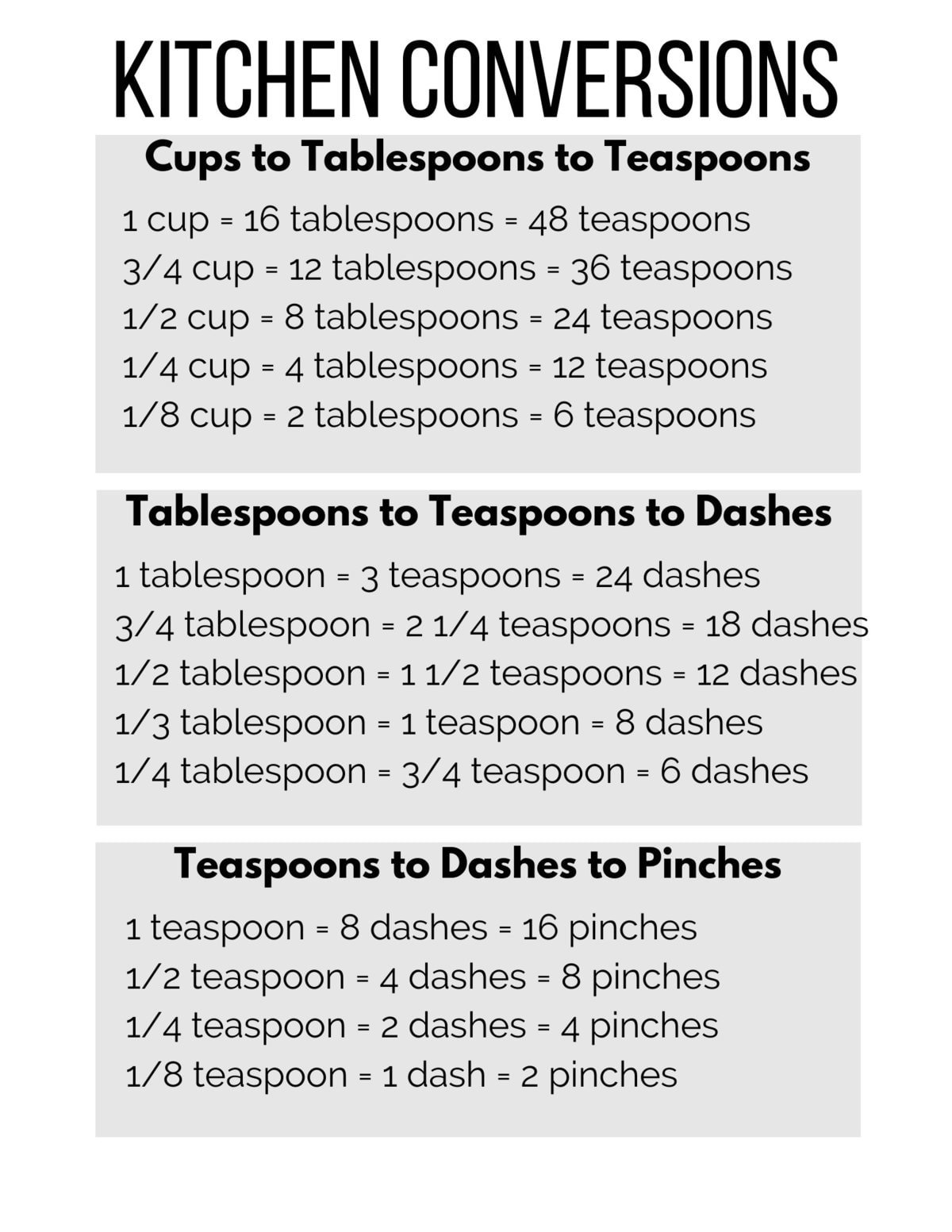
4. **Keep a Conversion Chart Handy:** Printable charts or even a handwritten one taped inside a cabinet door can be a lifesaver. This quick reference eliminates the need to recall specific numbers under pressure. You can find many free printable conversion charts online.
5. **Understand Teaspoon Equivalents:** Since the answer for 1/3 US cup often involves 1 teaspoon, remember these basics:
* 1 tablespoon = 3 teaspoons
* 1/2 tablespoon = 1.5 teaspoons
* 1/3 tablespoon = 1 teaspoon (this is key for our 1/3 cup conversion!)
6. **Don't "Heap" Unless Specified:** Unless a recipe explicitly says "heaping tablespoon," assume level measurements. Use a straight edge (like the back of a knife) to level off dry ingredients.
7. **Embrace Learning:** Don't be afraid to look up conversions for ingredients you're unsure about. The more you cook and bake, the more intuitive these conversions will become. For a deeper dive into common baking conversions, you can always
Master 1/3 Cup to Tablespoons: Essential Baking Conversion.
Quick Conversion Chart for Common Cup Fractions (US System)
Here's a handy reference for US customary cup-to-tablespoon conversions:
* **1/8 cup:** 2 tablespoons
* **1/4 cup:** 4 tablespoons
* **1/3 cup:** 5 1/3 tablespoons (or 5 tablespoons + 1 teaspoon)
* **1/2 cup:** 8 tablespoons
* **2/3 cup:** 10 2/3 tablespoons (or 10 tablespoons + 2 teaspoons)
* **3/4 cup:** 12 tablespoons
* **1 cup:** 16 tablespoons
Conclusion
No more guessing! You now have a definitive answer to how many
tablespoons in 1/3 cup, along with a comprehensive understanding of why this seemingly simple conversion can be nuanced due to international measurement standards. For US recipes, remember the golden rule: **1/3 cup equals 5 tablespoons and 1 teaspoon**. By understanding the context of your recipes and applying these practical tips, you'll ensure greater accuracy in your kitchen, leading to consistently delicious results and a more enjoyable cooking and baking experience. Embrace precision, and watch your culinary creations flourish!